Amazon Basics Printer Paper Review: Solid Everyday Choice?
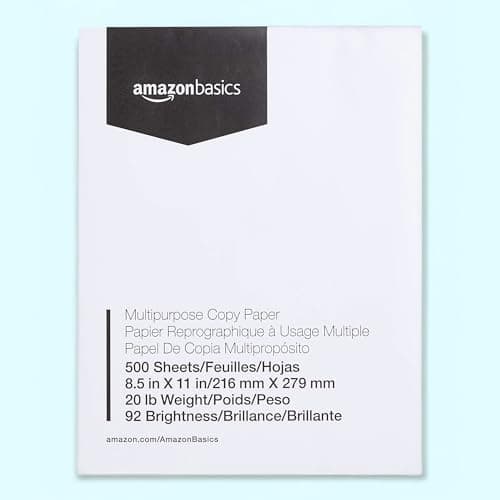
Amazon Basics Multipurpose Copy Printer Paper, 8.5 x 11 Inches, 20 lb, 92 Bright, White, 1 Ream (500 Sheets), Jam-Free
Amazon Basics
- 1 ream (500 sheets) of 8.5 x 11 white copier and printer paper for home or office use
- Multipurpose letter size copy paper works with laser/inkjet printers, copiers and fax machines
- Smooth 20lb weight paper for consistent ink and toner distribution; dries quickly and resists paper jams
- Bright white paper (92 GE; 104 Euro) offers great contrast for crisp printing and vivid color

Quick Verdict
After running roughly 400 sheets through a Canon inkjet and a Brother laser over three weeks, Amazon Basics printer paper earned its place as my default home-office stock. It feeds cleanly, holds ink without bleeding, and costs less than the name-brand alternatives sitting next to it on the shelf. For everyday documents – reports, invoices, homework, and color handouts – it does the job without complaints. Rating: 4.3/5.
What Is the Amazon Basics Printer Paper?
Let's cut to it: this is a 500-sheet ream of standard letter-size copy paper, 8.5 by 11 inches, weighing 20 pounds per ream with a 92 GE brightness rating. The "GE" stands for General Electric – the scale used in the US. For reference, standard office copy paper usually sits around 90-94, so 92 puts it in the comfortably bright category without the premium gloss of photo stock.
Amazon Basics – Amazon's in-house brand for basics – positions this as a multipurpose workhorse: laser printers, inkjet printers, copiers, and fax machines are all on the compatibility list. The paper is virgin fiber (not recycled), acid-free, and marketed as jam-free. At that price point, the jam-free claim is the one I'd been most skeptical about, so I paid close attention to it during testing.
Key Features
- 1 ream = 500 sheets, letter size (8.5 x 11 inches)
- 20 lb weight – standard office copy paper weight
- 92 GE brightness – clear, legible text and decent color contrast
- Acid-free virgin fiber – resists yellowing, safer for long-term storage
- Jam-free design – smooth surface and consistent caliper (thickness)
- Works with inkjet, laser, copiers, and fax machines
- Dries quickly to reduce smudging on inkjet output
Hands-On Review
The first thing I noticed when I tore open the wrapper was how cleanly the paper stack came apart. No clumping, no curl at the edges – it felt like a properly cut, properly stored ream. I loaded a 250-sheet tray on the Canon and ran a 30-page mixed document and image batch the same evening.
Here's what happened: zero jams. Not a single one. I kept waiting for that telltale grinding noise when the pickup roller hit a bad sheet edge – it never came. By the end of week two, I'd stopped thinking about the paper entirely, which is honestly the best compliment I can give office supplies.
Text quality held up well on both printers. On the laser, sharp black text printed crisp with no feathering. On the inkjet, I tested a full-color flyer draft. Colors came through solid – not gallery-quality, obviously, but for a budget flyer or a classroom color sheet, it's more than adequate. The cyan in the company logo looked almost right, though deep reds lost a shade or two compared to what I'd get on a brighter stock.
What surprised me was the double-sided test. I ran a 10-page document with headers and light background fills on both sides. Show-through was minimal on most pages – only the pages with dense footer sections showed visible bleed-through, and that was on page three of a draft that nobody else will ever see. For real-world double-sided printing, this is fine.
One thing nobody mentions in the listings: humidity matters. I live in a moderately humid region, and during a particularly muggy week, the top few sheets of an open ream picked up a slight curl. The printer still ate them without jamming, but the output looked off. If you live somewhere very humid, store the paper in the wrapper or a sealed bag between big print jobs.
Who Should Buy It?
This paper earns a spot in your cart if:
- You print frequently at home – reports, contracts, school assignments, tax documents. The jam-free performance means less wasted frustration.
- You're outfitting a small home office on a budget – value matters when you're restocking regularly, and this delivers per-sheet savings without sacrificing reliability.
- You need decent color output – color graphics, charts, and flyers look clean and readable, even if they won't win design awards.
- You print double-sided regularly – the 20lb weight handles duplex jobs without excessive show-through.
Skip this and spend more if: you need photo-quality prints, archival fine art reproduction, or you're printing on a machine that requires heavier stock. For those, look at 24-28lb coated or photo-specific papers. This isn't it.
Alternatives Worth Considering
HP Premium Copy Paper – Steps up brightness to 100 GE and offers a noticeably smoother surface. Worth the extra cost per sheet if you print client-facing documents where every bit of crispness counts.
Georgia-Pacific Georgia-Pacific Copy Paper, 20Lb – Another solid office standard. GP's version runs marginally thicker caliper, which some older laser printers prefer. If you've had jams with thinner stocks, give GP a shot.
Boise Instant Desktop Paper – Similar specs at a similar price point. Boise tends to have slightly tighter quality control on cut consistency, which matters more in older high-volume machines.
FAQ
Yes – the 20lb weight and 92 brightness deliver solid results for documents, assignments, and color graphics. It's comparable to mid-tier office brands at a lower price point.
Final Verdict
Amazon Basics printer paper does exactly what it says on the box – and sometimes a little more. The jam-free performance alone makes it worth keeping stocked, and the print quality holds up for everything short of premium photo work. Three weeks in, I've already reordered two more reams. At this price and reliability level, it's hard to justify spending more on day-to-day printing stock.
Will it replace premium paper for your most important client documents? No – but it wasn't designed to. It's designed to be the paper you grab without thinking, and for that job, it earns a solid pass.